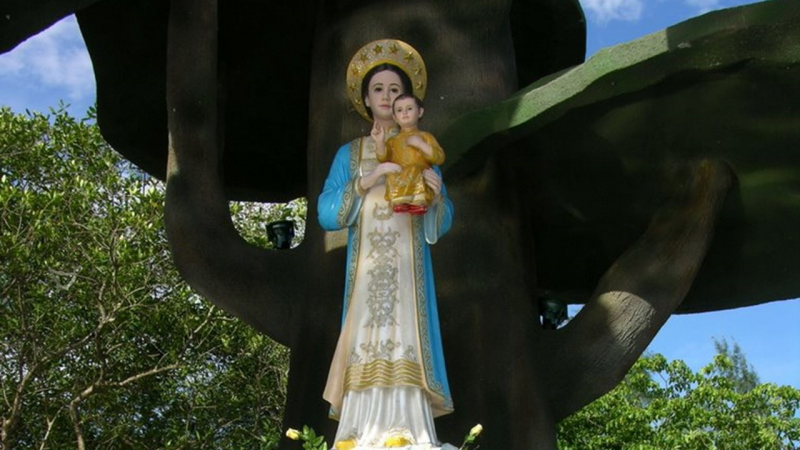
On the final day of our novena, the SSVP shared their reflections on Our Lady of La Vang, Vietnam.
Vietnam during the early 19th century was under the rule of the Nguyễn Dynasty, which was staunchly opposed to Catholics. The Catholic Church had made inroads in Vietnam through the work of missionaries, particularly the Jesuits and the Dominicans, but this had created tensions with the imperial authorities.
Persecution of Catholics in Vietnam was severe and relentless. The Nguyễn emperors, fearing the influence of the Catholic Church and its potential to undermine their rule, issued numerous edicts aimed at eradicating Catholics from Vietnam. Catholics were subjected to torture, imprisonment, and execution. Churches were destroyed, and the practice of the Catholic faith was driven underground. Despite the brutal suppression, Vietnamese Catholics clung to their faith tenaciously.
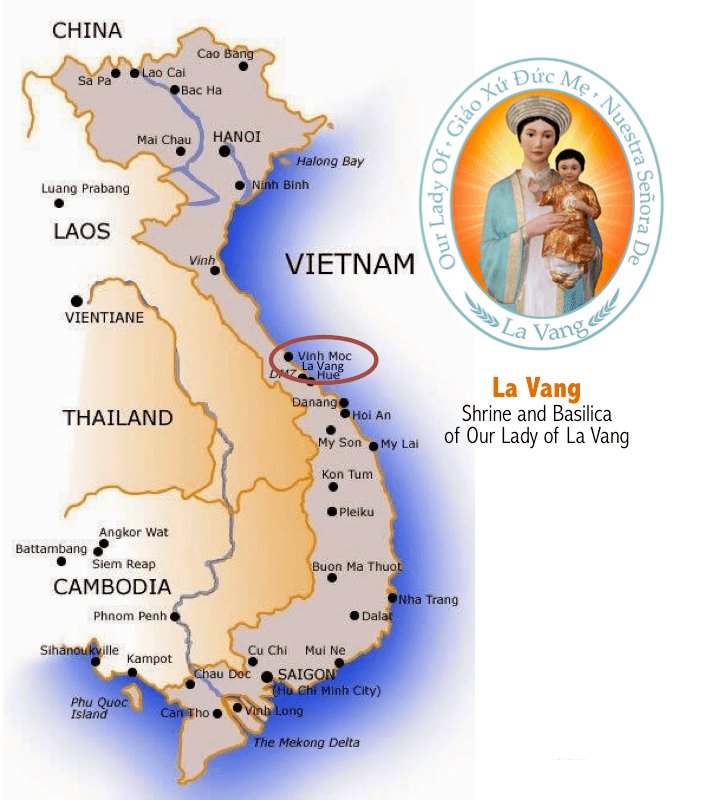
In this hostile environment, many Catholics sought refuge in the jungles and mountains to escape persecution. One such place was the region of La Vang, located near the town of Quảng Trị in central Vietnam. The dense forests of La Vang provided a natural sanctuary for those who refused to renounce their faith. Here, they prayed fervently, often in secret, and continued to practice their Catholic faith.
It is within this backdrop of persecution and hardship that the apparitions of Our Lady of La Vang are said to have taken place.
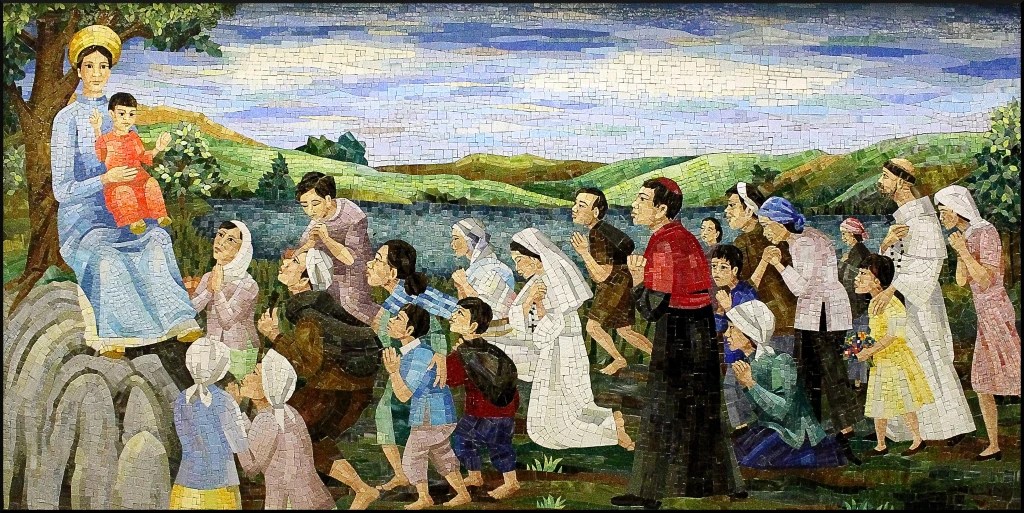
The specific date of the apparitions varies in different accounts, but it is generally believed to have occurred sometime between 1798 and 1802. According to tradition, a group of Catholics had gathered in the forest of La Vang to pray the Rosary one evening. They were seeking solace and divine intervention in the face of relentless persecution.
During their prayers, the Virgin Mary is said to have appeared to them, accompanied by two angels. Her appearance was not in the form of traditional Western representations of the Virgin, but rather, she appeared dressed in the attire of a Vietnamese woman of the time. This detail is significant as it symbolizes the deep connection between the Virgin Mary and the suffering Vietnamese Catholic community.
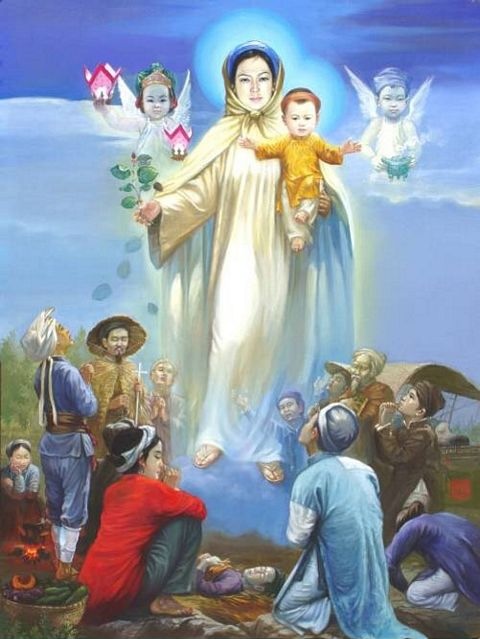
The descriptions of the apparitions of Our Lady of La Vang are consistent across many accounts. According to those who witnessed the apparitions, the Virgin Mary appeared as a radiant and compassionate figure. She wore a long traditional Vietnamese gown known as an “ao dai,” which is characterized by its flowing sleeves and elegant design.
During the apparitions, the Virgin Mary is said to have offered words of comfort and hope to the suffering Catholics. She reassured them that they were not alone in their trials and tribulations, and she encouraged them to remain steadfast in their faith. She also imparted specific instructions to the faithful gathered there.
One of the most remarkable aspects of the apparitions at La Vang is the instructions given by the Virgin Mary to the faithful. She directed them to use the leaves of the surrounding trees as a remedy for their illnesses and suffering. This guidance was followed, and miraculous healings were reported among those who applied these leaves as a form of herbal medicine.
The Virgin Mary’s instructions to use the leaves not only served as a practical means of healing but also reinforced the spiritual significance of the site. It became a place where both physical and spiritual healing were sought and experienced.
In keeping with the Virgin Mary’s instructions, the Catholics who witnessed the apparitions at La Vang built a simple chapel in the jungle. This chapel served as a physical testament to the apparitions and became a focal point for the burgeoning devotion to Our Lady of La Vang.
Despite the ongoing persecution, news of the apparitions and the healing properties of the leaves spread throughout the region, drawing more Catholics to the site. Over time, the chapel and the surrounding area became a place of pilgrimage for Vietnamese Catholics seeking solace, healing, and a connection to the Virgin Mary.

The message of the apparitions emphasized the following:
1. Endurance in Faith: The Virgin Mary encouraged the faithful to endure the trials and tribulations they faced due to their Catholic faith. Her presence provided them with the spiritual fortitude to persevere in the face of persecution.
2. Healing and Compassion: The use of leaves from the trees in the forest to treat illnesses and suffering symbolized the compassion and healing power of the Virgin Mary. This aspect of the apparitions underscored her role as a source of comfort and healing for the afflicted.
3. Unity and Community: The apparitions fostered a sense of unity among Vietnamese Catholics. The faithful gathered at La Vang found strength in coming together, sharing their experiences, and supporting one another in their shared commitment to their faith.
4. A Call to Devotion: The construction of the chapel and the pilgrimage site marked a call to devotion to Our Lady of La Vang. The faithful were encouraged to visit the site, seek intercession through the Virgin Mary, and draw spiritual inspiration from her example.
Over time, the site of the apparitions became a place of pilgrimage for Catholics from all over Vietnam. The chapel, initially a modest structure, was replaced by a more substantial church and shrine to accommodate the growing number of pilgrims. This church, known as the Basilica of Our Lady of La Vang, stands as a testament to the enduring faith of Vietnamese Catholics.
Within the Catholic Church, the Feast of Our Lady of La Vang is celebrated on November 22nd each year to commemorate the apparitions. This feast day holds great importance for Vietnamese Catholics and is observed with religious services, processions, and various cultural traditions.
The annual pilgrimage to La Vang on this occasion draws thousands of faithful who come to pay their respects, seek spiritual solace, and offer prayers to the Virgin Mary. The pilgrimage is a deeply spiritual and cultural experience that strengthens the bonds of the Vietnamese Catholic community.
Our Lady of La Vang has come to symbolize not only the enduring faith of Vietnamese Catholics but also their resilience in the face of persecution. She represents the hope and healing that many Catholics found in their devotion to her during a challenging period in their history.
The Virgin Mary’s choice to appear in traditional Vietnamese attire and her association with the local landscape and resources further solidified her connection with the people of Vietnam. She is seen as a maternal figure who understands the suffering and struggles of her Vietnamese children.
In recent years, the story of Our Lady of La Vang has gained recognition beyond Vietnam. The Catholic Church has acknowledged the importance of this devotion, and the Vatican has granted several official recognitions to the Marian apparitions at La Vang.
The international recognition of Our Lady of La Vang’s significance reflects the enduring devotion and faith of Vietnamese Catholics, as well as the cultural and spiritual importance of the apparitions. The story of La Vang continues to inspire Catholics worldwide to persevere in their faith and seek comfort in their devotion to the Virgin Mary.
The apparitions of Our Lady of La Vang in Vietnam are a profound and cherished part of the history. They are a testament to the enduring faith and resilience of Vietnamese Catholics who faced persecution and adversity with unwavering devotion.
The story of Our Lady of La Vang serves as a reminder of the power of faith, the importance of spiritual solace in times of hardship, and the enduring connection between the Virgin Mary and her children. It is a story that continues to inspire and draw pilgrims to the Basilica of Our Lady of La Vang, where they seek the intercession and comfort of Our Lady in their lives.
 Our Lady of Lourdes
Leave a comment